





Mild Stimulation IVF: A Gentler Approach to Personalized Fertility Treatment
Fertility treatment does not always depend on effort alone. For many women and couples, an important part of the journey is finding a treatment approach that is genuinely suited to the body, ovarian response, age, and individual cause of infertility.
A treatment protocol that works well for one person may not produce the same response in another. This is why personalized fertility care plays such an important role, particularly for women who have previously undergone unsuccessful treatment or whose ovaries do not respond well to conventional stimulation protocols.
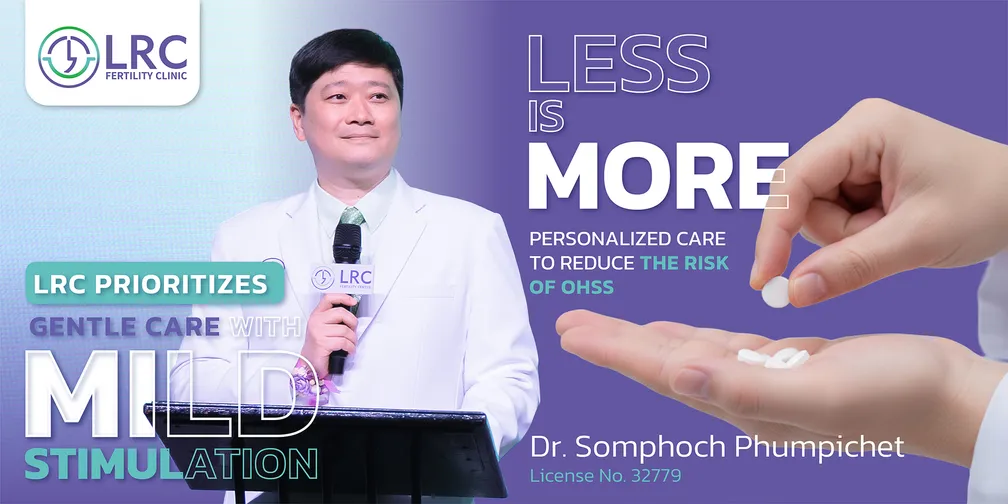
Mild Stimulation IVF is one approach that focuses on stimulating the ovaries more gently. It is designed to use a more individualized treatment plan while aiming to reduce medication exposure and lower the risk of excessive ovarian stimulation.
At LRC Fertility Clinic, this approach has been developed and refined by Dr. Sompoch Phumipichet as part of the clinic’s commitment to personalized reproductive care.
What Is Mild Stimulation IVF?
Mild Stimulation IVF, sometimes referred to as mild ovarian stimulation, is a fertility treatment approach that uses a gentler ovarian stimulation protocol compared with conventional high-dose stimulation.
During a standard IVF or ICSI cycle, fertility medications may be used to encourage the ovaries to develop multiple follicles at the same time. The goal is usually to retrieve several eggs that can be fertilized and developed into embryos in the laboratory.
Mild Stimulation follows the same overall objective of supporting follicle development, but the treatment plan is adjusted to place greater emphasis on the woman’s natural ovarian response. Rather than focusing only on producing a large number of eggs, Mild Stimulation aims to create a balance between the number of eggs retrieved, the woman’s physical response, medication exposure, and the potential quality of the eggs.
The exact protocol may vary depending on the individual. Age, ovarian reserve, hormone levels, previous treatment history, and the response to fertility medication all need to be considered before the treatment begins.
Why Is Mild Stimulation Considered a Gentler Option?
Conventional ovarian stimulation can be appropriate and effective for many patients. However, not every woman requires or responds well to a high level of fertility medication. Some women may experience discomfort, emotional pressure, or side effects during ovarian stimulation. Others may produce only a limited number of eggs despite receiving higher medication doses.
Mild Stimulation IVF offers a different perspective. Instead of assuming that more medication will always lead to a better outcome, the protocol is designed around how the ovaries are likely to respond. This individualized approach may help reduce unnecessary medication exposure and make the stimulation period feel more manageable for selected patients.
It may also provide a treatment experience that is closer to the body’s natural menstrual cycle, although the ovaries are still carefully monitored and supported by fertility medication. Mild Stimulation is not automatically better than conventional stimulation, and it is not suitable for everyone. Its value lies in selecting the right protocol for the right patient.
How Is Mild Stimulation Different From Conventional IVF Stimulation?
Both Mild Stimulation and conventional ovarian stimulation can be used as part of an IVF or ICSI treatment cycle. The main difference is the intensity of the stimulation protocol and the amount of medication selected for each patient.
Conventional stimulation often aims to encourage the development of a larger group of follicles. This may be appropriate for women with a good ovarian reserve and those who are expected to respond well to stimulation.
Mild Stimulation generally uses a gentler approach, with the treatment plan adjusted according to the patient’s ovarian reserve and expected response. The goal is not necessarily to retrieve the highest possible number of eggs. Instead, the focus is placed on obtaining an appropriate number of eggs while reducing the physical burden of treatment where possible.
Who May Be Suitable for Mild Stimulation IVF?
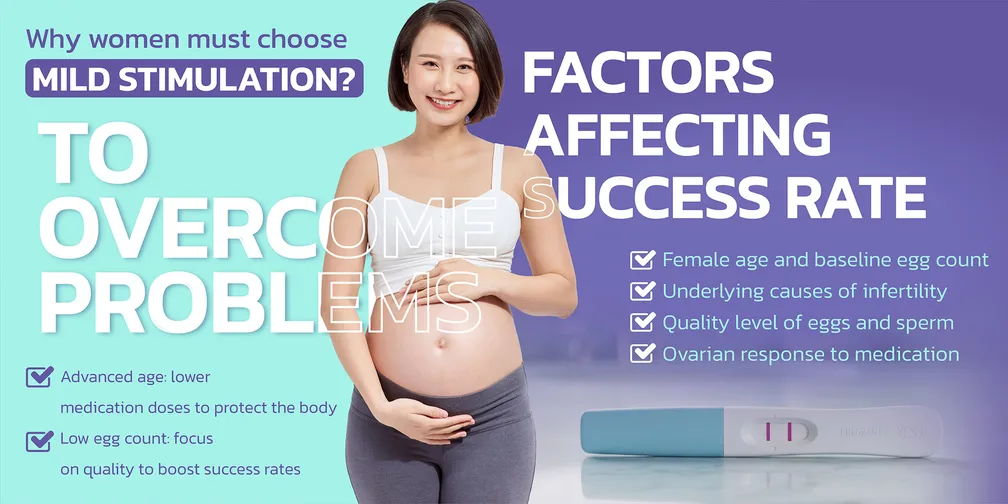
Mild Stimulation may be considered for women whose medical history, ovarian reserve, or previous treatment response suggests that a gentler protocol could be appropriate.
Patients who may be considered for this approach include:
- Women who have previously undergone unsuccessful fertility treatment
- Women whose ovaries responded poorly to conventional stimulation
- Women who wish to reduce exposure to fertility medication
- Women with concerns about excessive ovarian stimulation (OHSS)
- Women with a limited ovarian reserve
- Women aged 40 or older who are still planning to have a baby
- Patients who prefer a treatment approach closer to the natural cycle
- Women who experienced significant discomfort during a previous cycle
However, being included in one of these groups does not automatically mean Mild Stimulation is the best treatment. A fertility specialist must first evaluate the patient’s age, ovarian reserve, hormone levels, ultrasound findings, previous treatment records, and overall reproductive health. The quality of the sperm and the underlying cause of infertility must also be considered, particularly when the cycle will include IVF or ICSI.
Mild Stimulation for Women Over 40
Age is one of the important factors affecting female fertility. As women become older, both the number and quality of available eggs generally decline. For women aged 40 and above, simply increasing the amount of stimulation medication may not always result in a proportional increase in the number of eggs retrieved.
In selected cases, Mild Stimulation may be considered to support the follicles that are naturally available during that treatment cycle without placing unnecessary pressure on the ovaries. The treatment plan should focus on realistic expectations and the individual response of the ovaries rather than using age alone to determine the protocol.
Mild Stimulation After a Previous Unsuccessful IVF Cycle
An unsuccessful IVF or ICSI cycle does not always mean that future treatment will also be unsuccessful. However, it may indicate that the previous treatment protocol should be reviewed carefully. Doctors may consider several questions before recommending the next cycle:
- How many follicles developed & eggs retrieved?
- How many eggs were mature & successfully fertilized?
- What was the overall quality of the embryos?
- Did the ovaries respond as expected to the medication?
- Were there any side effects or complications?
- Was the stimulation protocol appropriate for the ovarian reserve?
For some patients, using a higher medication dose again may not significantly improve the ovarian response. Mild Stimulation may then become another option to consider. At LRC Fertility Clinic, previous fertility treatment records can be reviewed together with current hormone and ultrasound results to determine whether a different stimulation approach may be appropriate.
Can Mild Stimulation Reduce the Risk of OHSS?
Ovarian Hyperstimulation Syndrome, commonly known as OHSS, is a condition that can occur when the ovaries respond excessively to fertility medication. Symptoms may range from abdominal discomfort and bloating to more significant complications in severe cases.
Because Mild Stimulation generally aims to use a gentler and more individualized medication protocol, it may help reduce the risk of excessive ovarian response in selected patients. However, Mild Stimulation does not completely eliminate the possibility of OHSS. Regular ultrasound examinations and hormone monitoring remain important throughout the stimulation process.
What Factors Affect the Success of Mild Stimulation?
The outcome of Mild Stimulation does not depend on the medication protocol alone. Fertility treatment involves several biological and medical factors that must be considered together:
Age and Ovarian Reserve
The age of the woman and the number of remaining eggs influence how the ovaries respond to stimulation. Tests such as AMH, hormone blood tests, and ultrasound follicle counts may be used to assess ovarian reserve.
Cause of Infertility
Infertility may be related to ovulation problems, blocked fallopian tubes, endometriosis, sperm abnormalities, age-related fertility decline, or unexplained factors. The main cause affects whether Mild Stimulation should be combined with IVF, ICSI, embryo testing, or another method.
Egg and Sperm Quality
The number of eggs retrieved is only one part of fertility treatment. Egg maturity, sperm quality, fertilization, embryo development, and uterine health are also vital. When male factor infertility is present, ICSI may be recommended as the fertilization method.
Response to Ovarian Stimulation
Monitoring the ovarian response allows the doctor to adjust the treatment plan and avoid relying on a fixed protocol for every patient.
Previous Fertility Treatment
Previous IVF or ICSI cycles provide useful data to help the medical team design a more appropriate Mild Stimulation protocol for the next treatment cycle.
Can Mild Stimulation Be Combined With ICSI?
Mild Stimulation describes the method used to stimulate the ovaries. ICSI describes the laboratory method used to fertilize an egg. These are separate parts of fertility treatment and can be used together.
After the eggs are retrieved following Mild Stimulation, the fertility team may use ICSI to fertilize mature eggs. During ICSI, an embryologist selects an individual sperm and injects it directly into the egg. This may be considered when sperm concentration is low, sperm movement is poor, or previous IVF cycles resulted in poor fertilization.
Is Mild Stimulation Less Successful Than Conventional IVF?
The success of fertility treatment cannot be judged only by the number of eggs retrieved. Conventional stimulation may produce more eggs in some patients, but a larger number does not guarantee that every egg will be mature, fertilize normally, or develop into a suitable embryo.
Mild Stimulation may produce fewer eggs, but it may still be a reasonable approach for patients who are unlikely to benefit from high-dose stimulation. No fertility treatment can guarantee pregnancy. The purpose of personalized treatment is to select a protocol that offers an appropriate balance of medical safety, ovarian response, and reproductive potential for each patient.
Why Personalized Fertility Treatment Matters
Fertility treatment should not follow a single formula for every patient. Two women of the same age may have different ovarian reserves, hormone levels, medical histories, and responses to medication. Personalized fertility treatment starts with understanding the individual rather than selecting a protocol based only on general statistics.
Mild Stimulation at LRC Fertility Clinic
LRC Fertility Clinic provides comprehensive fertility assessment and reproductive treatment for individuals and couples experiencing difficulties conceiving. The clinic offers services including Mild Stimulation, IVF, ICSI, embryo culture, frozen embryo transfer, egg freezing, and embryo genetic testing (PGT).
The Mild Stimulation approach at LRC has been developed and refined by Dr. Sompoch Phumipichet, with an emphasis on personalized ovarian stimulation and careful monitoring of each patient’s response.
Is Mild Stimulation the Right Choice for You?
Mild Stimulation may offer a gentler fertility treatment option for selected patients, particularly those who have previously experienced unsuccessful treatment, responded poorly to high-dose medication, or wish to explore a protocol with reduced medication exposure.
The most suitable fertility treatment is not always the most intensive one. It is the approach that is carefully matched to the patient’s body, medical information, and reproductive goals.


z-z582164927156.webp)